VanishGuard
Making an abstract privacy service visible and understandable.
A bilingual service website that explains file-risk review, metadata cleaning and safer disposal through a dark visual world, numbered service chapters, use cases and a structured enquiry form.
- Industry
- File privacy & cybersecurity services
- Our role
- Bilingual file-privacy service website
- Project focus
- Map the offer
01 / THE CHALLENGE
File privacy is difficult to explain through a short slogan. The site needs to show what the service covers, how the proposed workflow is organised and which information a visitor should provide when starting a conversation.
02 / HOW WE DID IT
Map the offer
Break a broad privacy proposition into service pillars, operational stages and use cases visitors can recognise.
Build the visual narrative
Use dark and luminous contrasts, large type and numbered sections to give the technical content a distinctive rhythm.
Structure the enquiry
Close the story with fields that capture the visitor’s needs and preferred service level, ready for a follow-up conversation.
03 / WHAT WE DELIVERED
- Bilingual file-privacy service website
- Dark visual direction and service narrative
- Numbered service and lifecycle chapters
- Six-scenario use-case carousel
- Subscription-tier enquiry interface
- Responsive Arabic and English navigation
What came together
A structured digital introduction to the privacy service, connecting its scope, proposed workflow and enquiry journey.
04 / INSIDE THE EXPERIENCE
A visual language for protection
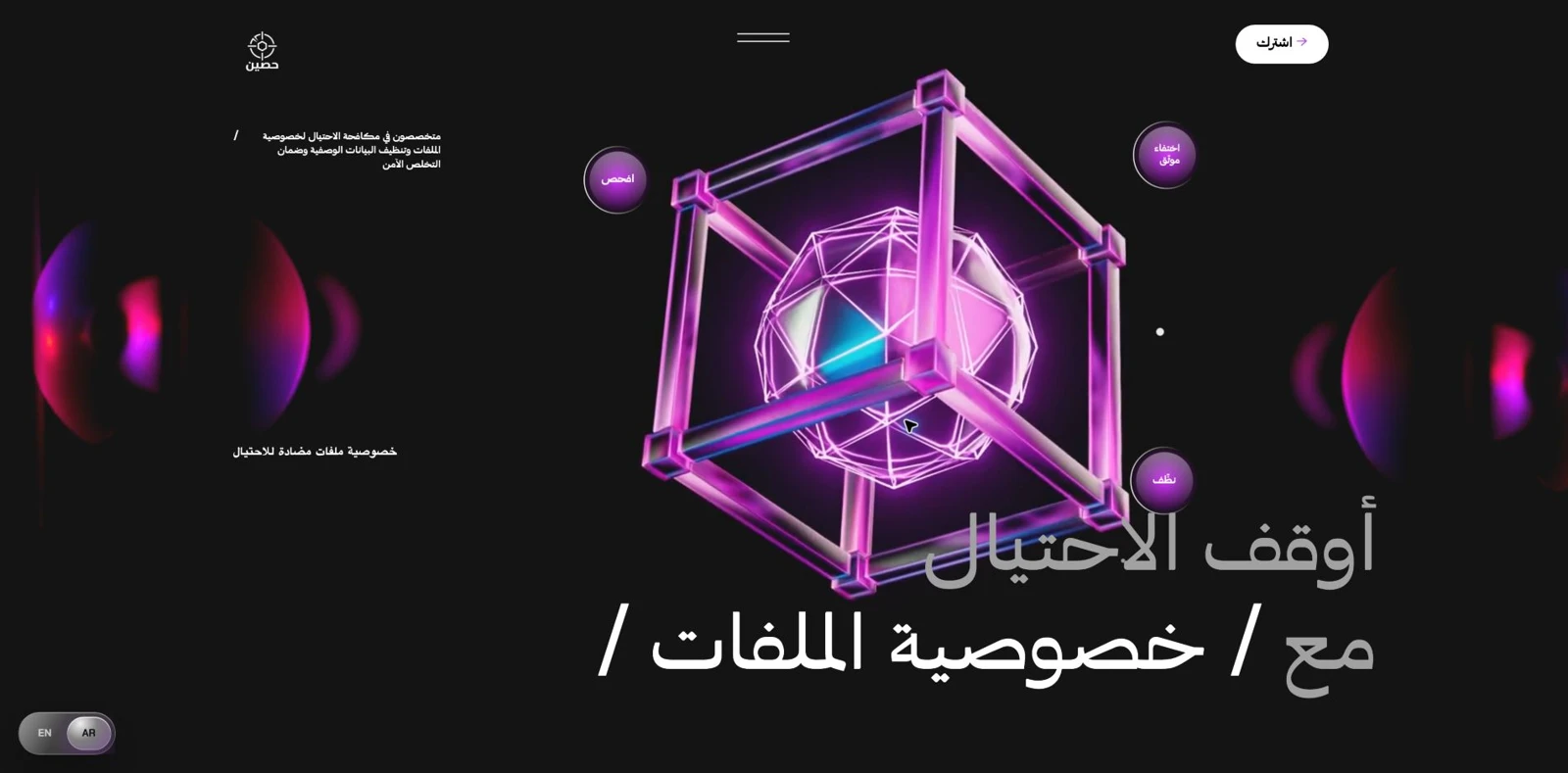
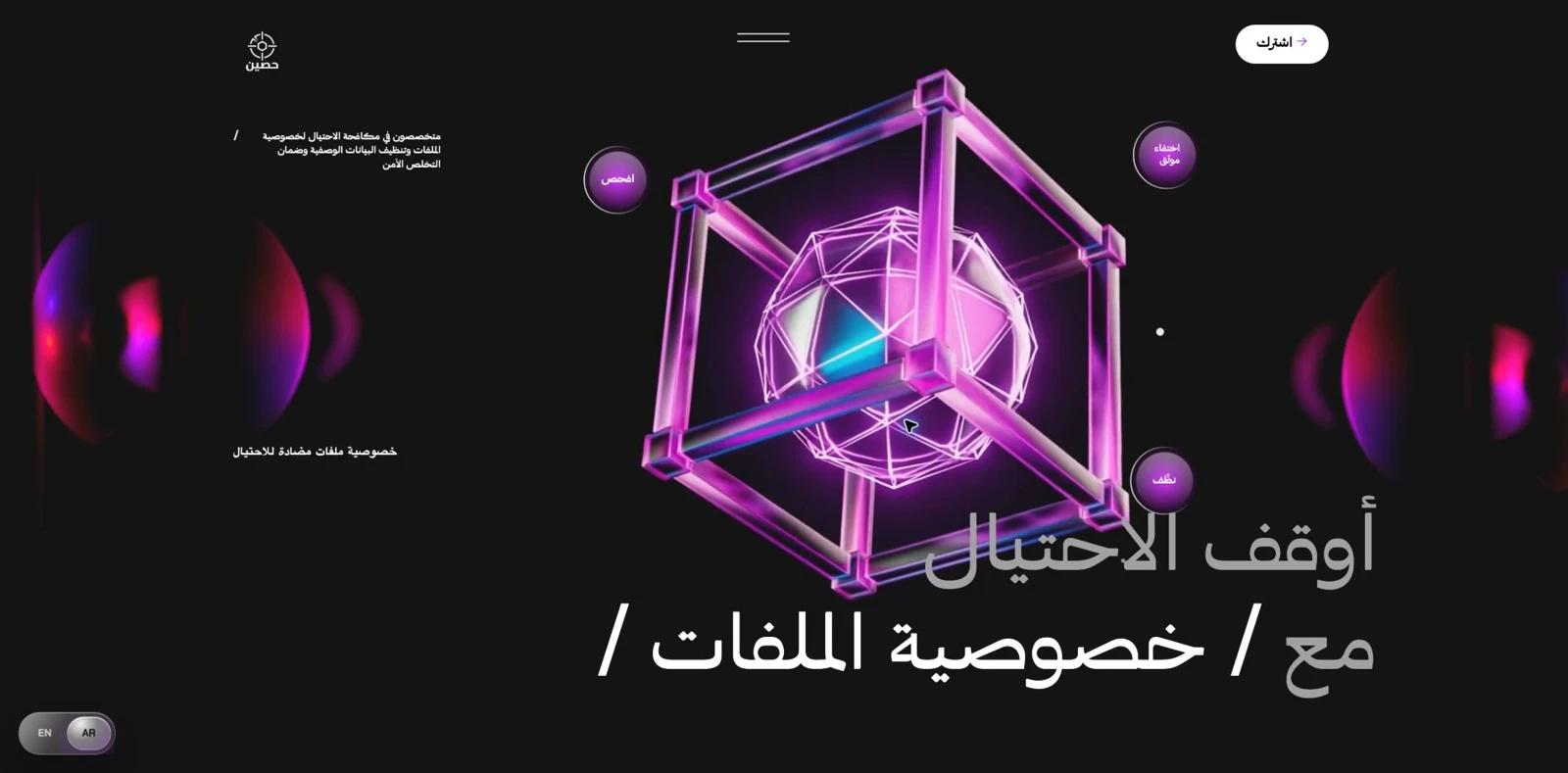
A dark canvas, luminous purple forms and oversized Arabic typography create an expressive opening. The service message stays attached to files, privacy and risk rather than relying on a generic technology catalogue.
Four service pillars
File protection, rapid cleanup, subscription assurance and safer disposal form the first service layer. Numbered chapters divide the offer into readable parts, with references to PDF, images, Office documents and attachments.
Scope that goes beyond a headline
The service taxonomy includes suspicious-document warnings, metadata removal, personal-data exposure review, incident review, disposal guidance, traceability notes and attachment integrity. These are presented as the service’s stated areas of work.
A lifecycle narrative
Privacy operations, subscription support and an audit chapter explain the proposed service lifecycle. The content distinguishes findings, removed information and remaining context to make the offer easier to discuss.
Scenarios before the form
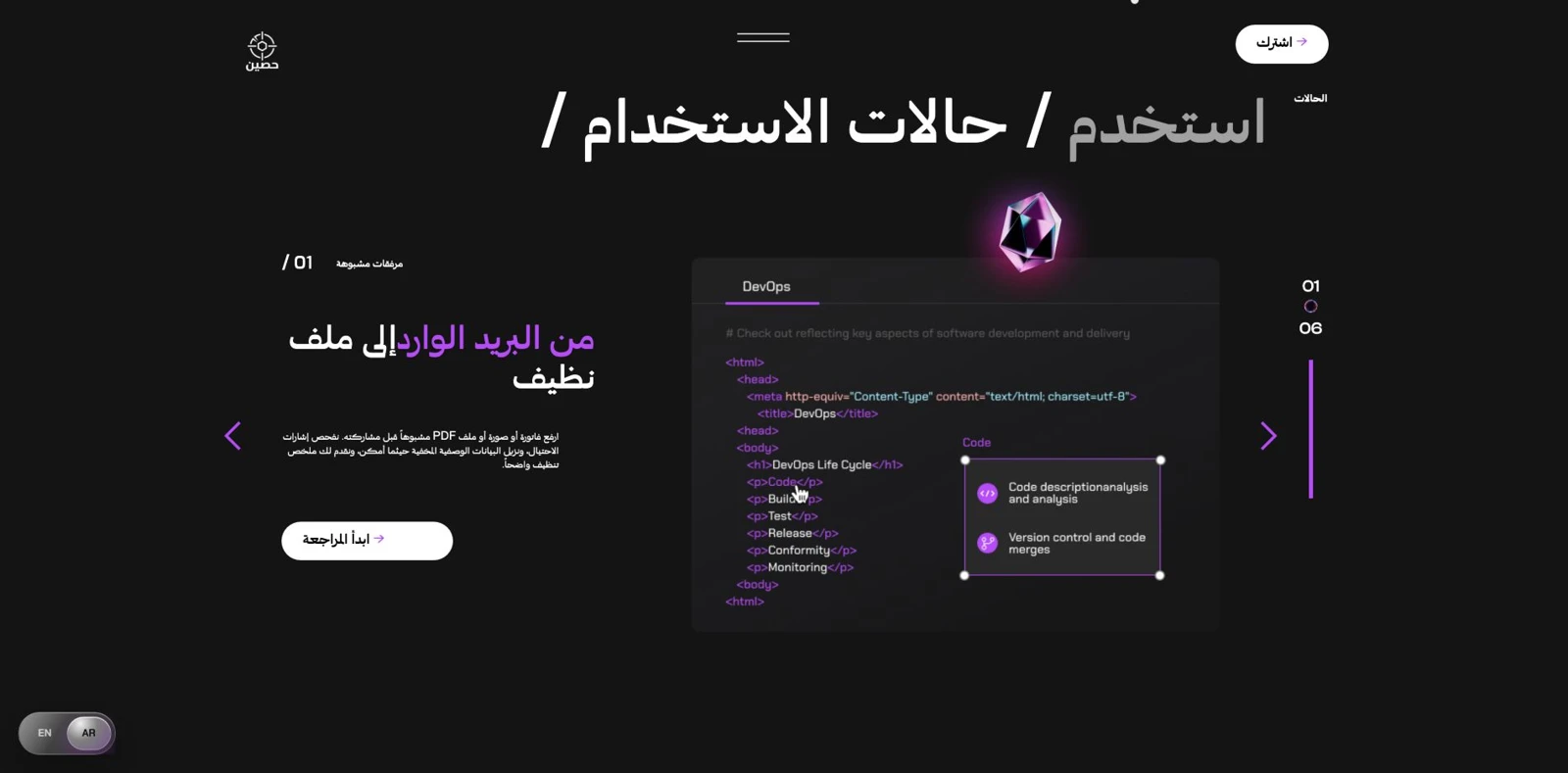
A six-card use-case carousel gives concrete contexts such as suspicious inbox attachments. Previous and next controls let visitors explore situations before reaching the enquiry section.
An enquiry with useful context
The form asks for name, email, help needed, a description and a subscription tier from Starter through Enterprise. This case study covers the website presentation and enquiry interface; it does not claim a verified scanning engine or payment integration.
05 / A CLOSER LOOK
Real screens from the project. Open any image to inspect it.
Explore the project in its own world.
Visit website cyber-ochre-eta.vercel.app ↗Next project
View all ↗
Rafraf
We built Rafraf’s full e-commerce website, bringing a catalogue of 200K+ auto parts into a connected shopping experience, from finding a compatible part to checkout.